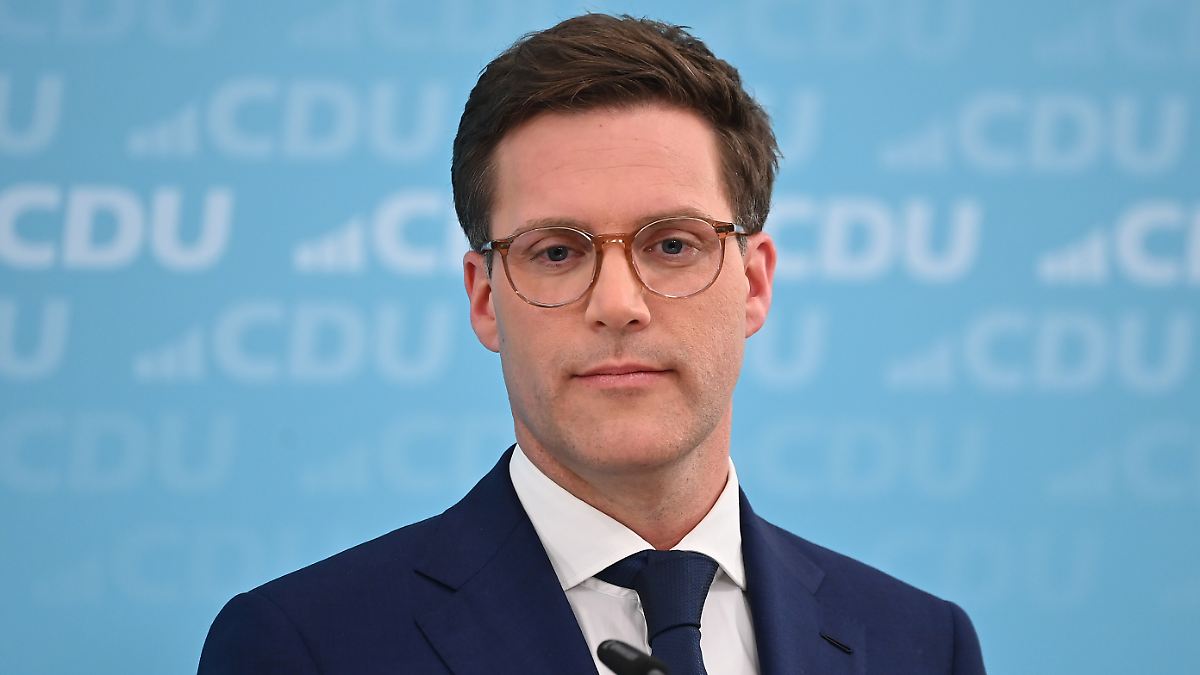
Manuel Hagel Defends Heated Teacher Confrontation Amidst Election Scrutiny
In the high-stakes final stretch of the Baden-Württemberg state election campaign, CDU top candidate Manuel Hagel found himself at the center of a public debate after a television broadcast showed a tense exchange with a teacher during a school visit. The incident, quickly dubbed the Manuel Hagel Lehrerin Video, captured Hagel cutting off the teacher mid-question, asserting his desire to speak directly with the students. Hagel has since defended his actions, attributing his reaction to the "heat of the moment" and emphasizing his human nature, rather than that of a "robot." This confrontation comes at a critical juncture, with the election just days away and Hagel already under pressure from resurfaced past remarks.
The Viral Exchange: What the Manuel Hagel Lehrerin Video Showed
The controversial segment was aired as part of an ARD Mittagsmagazin series, which followed leading candidates on their campaign trail, aiming to showcase their interactions with ordinary citizens. The film crew accompanied Hagel during a two-hour visit to a community school in Stuttgart. Here, a teacher, whose class Hagel was visiting, engaged him in a series of critical questions regarding current government policy and CDU proposals.
The teacher pressed Hagel on various issues, including the CDU's call for a compulsory, tuition-free kindergarten year, pointing out the party's decade-long involvement in the state government. "You've been part of the state government for ten years, so it surprises me why there hasn't been a response for so long," she challenged. Hagel retorted, "Well, what's the alternative – that we do nothing?" Her skepticism was palpable when she added, "I just have the fear, assuming you could continue to govern, that all this was just 'blabla' in the election campaign."
The pivotal moment, now widely discussed from the Manuel Hagel Lehrerin Video, occurred when the teacher attempted to ask a question concerning inclusion and staff shortages in schools. Hagel abruptly interrupted her, stating directly, "Now I'm speaking with the students." This swift dismissal of the teacher's query sparked immediate public reaction and considerable media attention, questioning the politician's conduct and respect for educators.
For more details on the teacher's poignant questioning, you can read Teacher Grills Hagel on Policy: "Blabla" Promises?
Hagel's Defense: "Not a Robot, But a Human Being"
Following the broadcast, Manuel Hagel offered a robust defense of his behavior in an interview with Welt TV. He acknowledged that sometimes "in the heat of the moment" one might say something that, in retrospect, "could have been said more kindly." However, he stressed his humanity, stating, "I am not a robot, but a human being with completely normal feelings."
Hagel elaborated on his perspective, explaining that his primary focus during the school visit was to engage with the students, who had many important questions he wished to discuss. He also claimed that the television segment failed to show earlier instances where the teacher had, according to him, interrupted him multiple times. "What, of course, was unfortunately not shown were the several times before when the teacher interrupted me," Hagel stated. "And at some point, I then said I would like to speak with the children – because that is also the purpose of a school visit."
This defense highlights the often-fraught balance politicians must strike between appearing authentic and maintaining composure under intense public and media scrutiny. It also brings to light the differing objectives that can arise during such visits: a politician's desire to connect with potential young voters versus an educator's duty to advocate for their profession and critical issues.
Under the Microscope: Campaign Pressure and Past Controversies
The incident captured in the Manuel Hagel Lehrerin Video is not an isolated event but rather unfolds within a broader context of significant political pressure on Hagel. The Landtagswahl in Baden-Württemberg is fiercely contested, with recent ZDF Politbarometer polls showing the CDU and the Greens neck and neck at 28 percent. The outcome will determine which party potentially leads the next coalition government, with the strongest party likely nominating the Minister-President.
Adding to the current scrutiny, Hagel had already faced criticism in late February over a several-year-old interview. This previous video, recorded after another school visit, showed Hagel making what many perceived as inappropriate comments about a class being "80 percent girls – so there are worse appointments for 29-year-old deputies than this." He also recalled a student who asked him a question, describing her by her first name and appearance: "brown hair, doe eyes." These remarks led to accusations of sexism and objectification, further complicating his public image.
The resurfacing of this older footage, combined with the new Manuel Hagel Lehrerin Video, paints a picture of a candidate grappling with the intense demands of modern political campaigning, where every word and action is meticulously observed and often amplified by social media. The public's expectations for politicians to embody professionalism, empathy, and effective communication are higher than ever, especially when interacting with vital sectors like education.
For more context on Hagel's previous media challenges, delve into Hagel's School Visit Controversy: Past Remarks Resurface.
Navigating Public Discourse: Lessons from the Confrontation
The confrontation highlighted in the Manuel Hagel Lehrerin Video offers valuable insights into the dynamics of political communication, particularly during a heated election cycle. For politicians, it underscores the importance of:
- Active Listening: Even when facing critical or challenging questions, allowing individuals to fully articulate their points can prevent misunderstandings and demonstrate respect.
- Emotional Regulation: While acknowledging human emotions, public figures are often held to a higher standard of composure. Strategies for de-escalation and maintaining a constructive tone are crucial.
- Audience Awareness: Understanding the multiple audiences present – students, teachers, television viewers – and tailoring communication to address each group appropriately is essential.
- Transparency: If there are unshown interactions that provide crucial context, proactively addressing them can help manage narratives.
From a citizen's perspective, this incident also reinforces the power of direct engagement with politicians and the media's role in bringing these interactions to a broader public. The teacher's persistence in raising critical issues serves as a reminder that political promises must be scrutinised and challenged.
Conclusion
Manuel Hagel's defense of his animated exchange with a teacher has added another layer of complexity to the already intense Baden-Württemberg state election. While Hagel emphasizes his human fallibility and the importance of engaging with students, the incident, captured in the widely-discussed Manuel Hagel Lehrerin Video, has undoubtedly intensified scrutiny of his demeanor and policy positions. As voters head to the polls, this event serves as a vivid illustration of the pressures on modern politicians and the public's demand for not just policy proposals, but also for respectful and authentic leadership in their representatives.