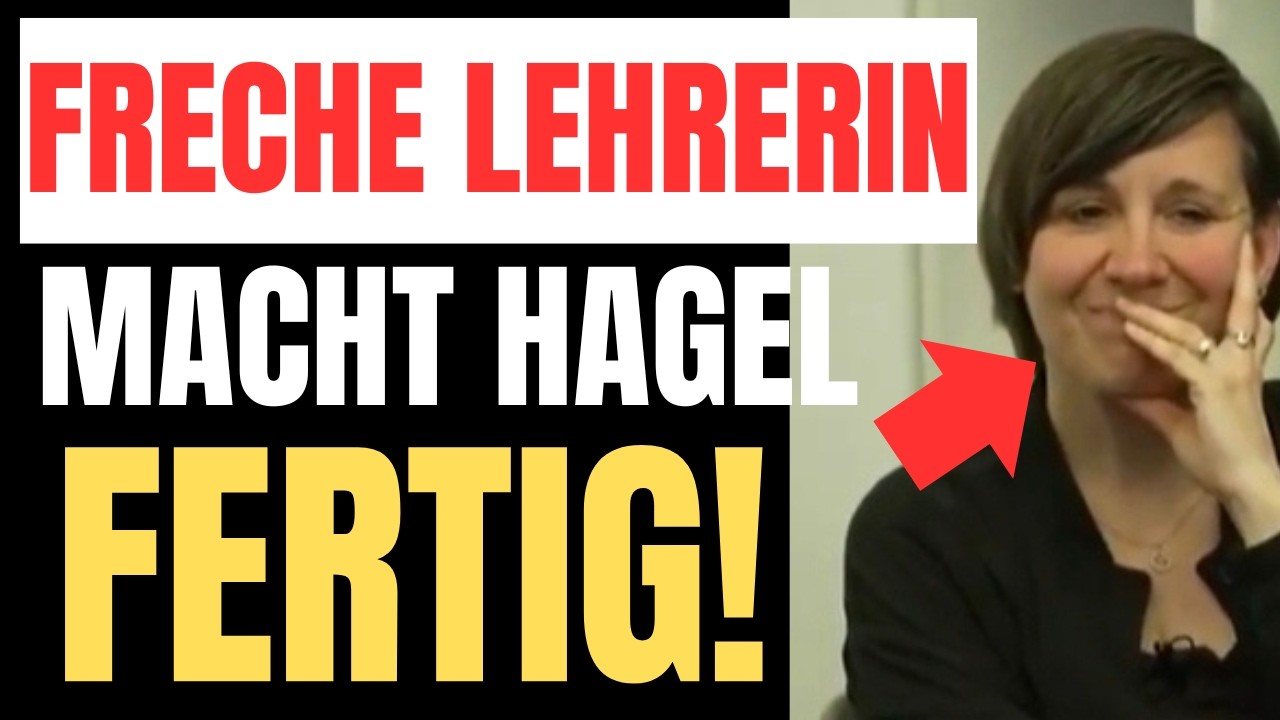
The political arena is often a crucible of public opinion, and few moments encapsulate this more vividly than direct confrontations between politicians and the citizens they seek to represent. In a striking instance that captured national attention, Manuel Hagel, the leading candidate for the CDU in Baden-Württemberg's state election, found himself at the center of a viral debate following a heated exchange with a teacher during a school visit. The incident, widely circulated through what became known as the Manuel Hagel Lehrerin Video, sparked discussions about political accountability, communication under pressure, and the delicate balance between campaigning and genuine public engagement.
The Classroom Confrontation: A Teacher's "Blabla" Accusation
The now-infamous interaction unfolded during a school visit documented for the ARD *Mittagsmagazin*, as part of a series following top candidates in the lead-up to the state election. Manuel Hagel was visiting a community school in Stuttgart, ostensibly to engage with students and understand their perspectives. However, it was a teacher from the school who seized the opportunity to grill the long-serving politician on the practical implications of his party's policies.
The teacher, whose class Hagel was visiting, adopted a notably critical stance. She challenged the CDU's proposals, particularly regarding a proposed tuition-free mandatory kindergarten year. Her central point of contention was the CDU's long tenure in the state government. "Seit zehn Jahren sind Sie doch an der Landesregierung, deswegen wundert es mich, warum da so lange nicht reagiert wurde," she stated directly, questioning why action hadn't been taken sooner if the issue was so important. When Hagel countered with "Ja, was ist denn die Alternative – dass wir jetzt nichts machen?" her skepticism reached a peak. She voiced a concern shared by many voters: "Ich habe halt einfach die Befürchtung, angenommen, Sie könnten weiterhin mitregieren, dass das alles Blabla war im Wahlkampf," accusing his campaign promises of being mere "Blabla" – empty talk – if the CDU were to remain in power.
The tension escalated further when the teacher attempted to ask a question concerning inclusive education and chronic staff shortages, critical issues within the German education system. It was at this juncture that Hagel cut her off abruptly, stating, "Jetzt spreche ich gerade mit den Schülern" (Now I'm talking to the students). This decisive dismissal, captured in the Manuel Hagel Lehrerin Video, became the flashpoint, drawing widespread criticism and igniting a debate across traditional and social media platforms.
Hagel's Defense: A Human, Not a Robot, in the Heat of the Moment
In the aftermath of the broadcast, Manuel Hagel offered a defense of his conduct, attempting to contextualize his reaction. Speaking to the Welt channel, he acknowledged that "sometimes in the heat of the moment" one might say something that, in retrospect, "could have been said more kindly." He humanized his response, stating, "Ich bin ja jetzt auch kein Roboter, sondern ein Mensch mit ganz normalen Gefühlen" (I am not a robot, but a human with normal feelings).
Hagel further elaborated that his primary intention during the school visit was to engage directly with the students, who, he claimed, had many important questions for him. He suggested that the broadcast did not show the full picture, alleging that the teacher had interrupted him "several times" prior to the moment that ultimately made it into the news report. His abrupt comment, he argued, was a reaction to these untelevised interruptions, intended to redirect the focus back to the students – the "point of a school visit."
This defense, however, met with mixed reactions. While some sympathized with the pressures faced by politicians on the campaign trail, others viewed it as an attempt to deflect from a seemingly dismissive attitude towards a concerned citizen. The incident served as a stark reminder of the challenges politicians face in balancing their campaign narrative with genuine, spontaneous interaction, especially when cameras are rolling. For a deeper dive into the immediate aftermath, read our related article: Manuel Hagel Defends Heated Teacher Confrontation.
Beyond the Immediate Clash: Resurfacing Controversies and Campaign Dynamics
The incident surrounding the Manuel Hagel Lehrerin Video was not an isolated event in Hagel's campaign narrative. Towards the end of February, just weeks before the state election, Hagel had already faced public scrutiny over a several-year-old interview. This earlier controversy stemmed from remarks he made after a previous school visit, where he described a class as being "80 percent girls," adding, "also da gibt's für 29-jährige Abgeordnete schlimmere Termine als diesen" (there are worse appointments for 29-year-old deputies than this one). He further recalled one student, naming her and describing her appearance with "brown hair, fawn eyes," comments that were widely criticized as inappropriate and objectifying.
These resurfacing incidents paint a challenging picture for Hagel and the CDU in a tightly contested election. The Baden-Württemberg state election saw the CDU and the Greens neck-and-neck in polls, both vying for the position of Minister-President. Such controversies, especially those touching upon sensitive topics like education and gender, can significantly sway public perception and voter sentiment in the crucial final weeks of a campaign. They highlight a politician's past actions and statements as a crucial lens through which their present conduct is viewed. For more details on this preceding controversy, see: Hagel's School Visit Controversy: Past Remarks Resurface.
Lessons from the Lehrerin Video: Navigating Public Engagement in the Digital Age
The Manuel Hagel Lehrerin Video offers invaluable lessons for politicians, the media, and the public about the dynamics of modern political communication. In an era of instant virality, every public appearance is scrutinized, and every interaction can become a defining moment.
For Politicians: Mastering the Art of Public Scrutiny
- Maintain Composure: Regardless of provocation or perceived unfairness, a calm and collected demeanor is paramount. Losing temper or appearing dismissive can be far more damaging than the initial challenge itself.
- Practice Active Listening: Even when adhering to a planned agenda, genuinely listening to and acknowledging public concerns, even from critics, builds trust and demonstrates respect. Shutting down dialogue can appear arrogant.
- Anticipate and Prepare: Politicians must anticipate tough questions, especially from stakeholders directly affected by policy (like teachers on education). Having a graceful, concise response ready, rather than a defensive one, is key.
- Transparency and Authenticity: While a campaign has a message to deliver, appearing authentic in interactions can counter accusations of "Blabla" promises. Voters increasingly demand genuine engagement over scripted rhetoric.
For the Public and Media: The Power of Context and Critical Viewing
- The Role of Editing: As Hagel's defense highlighted, televised snippets might not capture the full context of an interaction. Critical viewers should question what might have happened before or after the viral moment.
- Value of Direct Questions: The teacher's direct challenge, despite the ensuing controversy, showcased the vital role citizens play in holding politicians accountable, pushing them beyond rehearsed soundbites.
- Distinguishing Fact from Frame: It's important to differentiate between the factual exchange and the narrative frame in which it's presented. How a story is told can heavily influence its interpretation.
The "Blabla" accusation itself resonates with a broader global cynicism towards political promises. In a world saturated with campaign rhetoric, voters are increasingly seeking substance and verifiable action, rather than just aspirational words. Incidents like this underscore the imperative for politicians to bridge the gap between promises made on the stump and the perceived reality of governance.
Conclusion
The dramatic confrontation captured in the Manuel Hagel Lehrerin Video became more than just a momentary blip in a state election campaign; it served as a potent symbol of the ongoing tension between political aspirations and citizen skepticism. For Manuel Hagel, it highlighted the formidable challenge of managing public image and maintaining composure under intense scrutiny, particularly when past controversies resurface. For the broader political landscape, it reaffirmed the critical role of direct public engagement and the increasing demand for authenticity and accountability from elected officials. As campaigns continue to evolve, the ability to genuinely connect with and respectfully address the concerns of constituents, even in the face of pointed criticism, will remain an indispensable quality for any politician seeking to earn the trust of the electorate.